
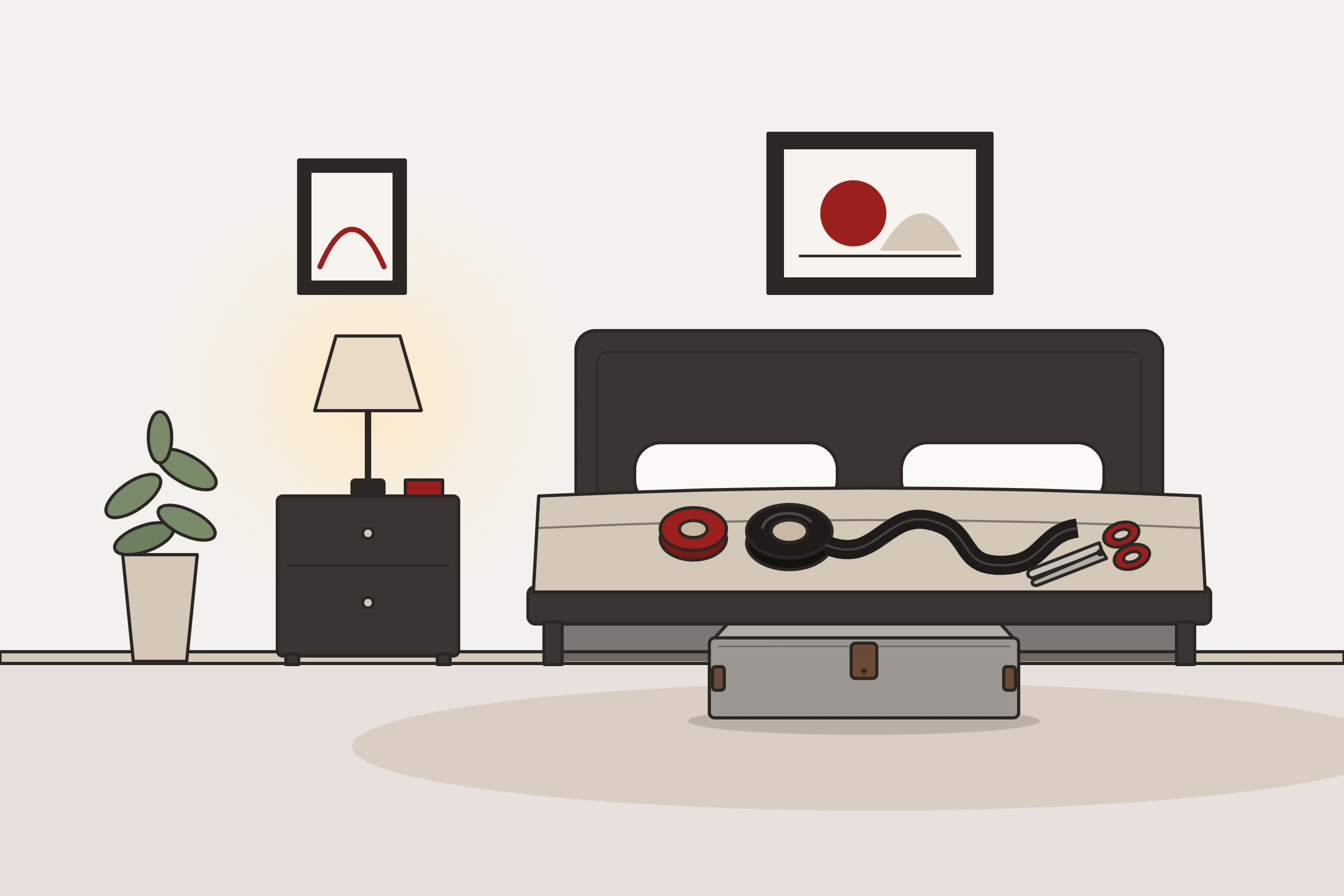
Rope looks incredible in photos. Then you try it at home with a tutorial paused on your phone, and twenty minutes later someone’s arm is asleep, the knot won’t come undone and the mood has quietly left the building.
Bondage tape skips all of that. It’s a wide, stretchy ribbon that sticks only to itself: not to skin, not to hair, not to your sheets. No knots, no learning curve, no wax-strip moment at the end.
If you’ve been curious about restraint but didn’t want homework, this is your starting point. Here’s why it works so well and how to use it safely.
What is bondage tape?
Bondage tape is a soft PVC tape with no adhesive at all. It clings to itself through static, so when you wrap it around something and press the layers together, it holds. Peel it apart and it lets go cleanly.
Most rolls are about 2 inches wide and around 65 feet long, which is plenty for wrists, ankles and a blindfold with tape left over. Black is the classic, red is the runner-up. It’s also inexpensive.
Fun fact: the same basic material shows up in hardware stores as non-adhesive wrapping tape for pipes and ductwork. Ours just has a more interesting job.
Bondage tape vs rope: an honest comparison
Rope has real strengths, and we’re not here to talk anyone out of it. But for most couples who just want to try being tied up, tape wins more rounds than it loses.
| Bondage tape | Rope | Verdict | |
|---|---|---|---|
| Learning curve | Wrap and press. That’s it. | Knots, ties and practice | Tape, easily |
| Skin and hair | Sticks only to itself | Can rub or burn if rushed | Tape |
| Getting out | Unwind it or snip it | Untie, sometimes with fumbling | Tape |
| Cost | Inexpensive | Good rope adds up fast | Tape |
| Looks | Sleek, glossy, a little latex | Hard to beat for artistry | Rope |
| Serious restraint | Stretchy and easier to wriggle out of (a safety plus) | Holds firm | Rope, if that’s your thing |
Rope is a skill. Tape is a shortcut, and that’s the whole point.
Why bondage tape is easier than rope
- No knots: If you can wrap a present, you can do this. Lay it on, press the layers together, done.
- Nothing sticks to skin or hair: There’s no adhesive, so there’s no ripping, no residue and no wincing when it comes off.
- Easy to remove: Unwind it in a few seconds, or snip it with safety shears if you want out fast.
- Easy to wriggle out of: That sounds like a flaw, but it’s a feature. Tape gives enough that the person wearing it can usually work free if something feels off, which makes it a safer starting point than rope, handcuffs or other restraints that hold firm no matter what.
- A little stretch built in: It gives slightly with movement, which makes it more forgiving than rope. It can still be wrapped too tight, so the slack rule below still applies.
- One roll, a lot of jobs: Cuffs, a blindfold, a tie to the bedpost. One roll covers what used to take a drawer full of gear.
Easy ways to use bondage tape
Wrist cuffs: Wrap each wrist three or four times, keeping the tape flat. Leave enough room to slide two fingers underneath. To join them, hold the wrists a few inches apart and wrap the tape around the gap between them instead of around the wrists themselves.
Ankle cuffs: Same idea, same slack. Ankles are less fussy than wrists, which makes them a good place to start.
Blindfold: Wrap the tape around the head over the eyes two or three times. Since it doesn’t stick to hair, it comes off without a single casualty. Keep it high on the face, well clear of the nose.
Bedpost or chair: Make a wrist or ankle cuff first, then run a tail of tape from the cuff to the post and loop it around a few times. The tape only sticks to itself, so it needs to wrap back onto itself to hold.
Dress-up: Yes, some people wrap it into an outfit. We’ll leave that one to your imagination.
How to use bondage tape safely
Easy doesn’t mean careless. Tape is gentler than rope, but anything that holds a body in place deserves a little respect. If you want more background, Wikipedia’s overview of bondage has a solid list of safety precautions.
- Talk first: Agree on what’s on the table, what’s not, and a safe word. A quick chat beforehand makes the whole thing more relaxed, not less.
- Two fingers of slack: You should always be able to slide two fingers under any wrap. If you can’t, it’s too tight.
- Keep it flat: Twisted tape bunches into a thin cord that can pinch and press harder than you’d expect. Lay it flat and smooth as you go.
- Never the neck, nose or mouth: Keep tape off the neck entirely, and never cover the nose or mouth. Breathing is not up for negotiation.
- Keep safety shears within reach: Blunt-tip shears (the kind EMTs use) cut through tape in one snip without any risk to skin. Keep them where you can grab them without looking.
- Check in and watch the color: Tingling, numbness, cold fingers or skin turning pale or bluish means loosen or cut, right away.
- Don’t leave anyone alone: Whoever is wrapped stays in sight the whole time.
- Take a minute after: Rub wrists and ankles, grab some water, and talk about what worked. That part counts too.
Where to keep your bondage tape
A roll of bondage tape is the easiest thing in your collection to lose. It rolls behind the nightstand, gets borrowed for a “craft project,” or turns up in the junk drawer at the worst possible moment.
Give it a home. The KinkBox has dedicated compartments, so the tape and the shears can live side by side, ready together. The light comes on when you open the lid, the concealed lock comes with two keys, and the whole thing slides under the bed where nobody thinks to look. If you’ve got bigger gear too, our guide to kink storage covers rope, cuffs and the rest, and our guide on how to hide sex toys from kids covers the curious-household side of things.
Keep the shears with the tape. If one is there, the other should be too.
The bottom line: Bondage tape gives you restraint without the homework: no knots, no sticky mess, no pulled hair. Keep it flat, keep it loose, keep the shears close, and give the roll a proper home in our discreet storage so it’s always there when the mood is.
FAQ
Does bondage tape stick to hair?
No. Bondage tape has no adhesive and only sticks to itself, so it comes off hair and skin cleanly.
Can you use duct tape or regular tape for bondage?
Please don’t. Regular tape sticks to skin and hair, it’s hard to get off quickly, and removing it hurts. Use tape made for the job.
Is bondage tape good for beginners?
It’s the best place to start. No knots to learn, nothing to buy beyond the tape and a pair of safety shears, and it’s easy to stop at any point.
Can you use bondage tape as a blindfold?
Yes, and it’s one of its best uses. Wrap it over the eyes a few times and keep it well above the nose.


